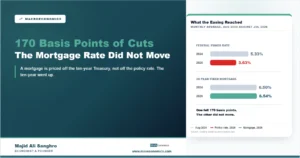
Macroeconomic Trends and Analysis Fed Rate Cuts Have Not Reached the Mortgage Market Fed rate cuts of 170 basis points have not lowered mortgage rates. The ten-year Treasury rose instead, and four fifths... August 9, 2026
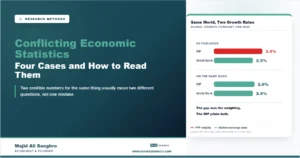
Research Methods in Economics Conflicting Economic Statistics: Four Cases and How to Read Them In the summer of 2026 two of the most respected institutions in economics published forecasts for global growth in the... August 8, 2026
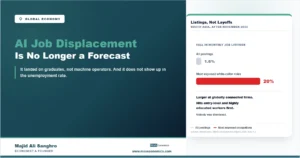
Global Economic Insights AI Job Displacement Is No Longer a Forecast Almost everything written about artificial intelligence and employment is about the future. Studies estimate what share of tasks could be... August 8, 2026
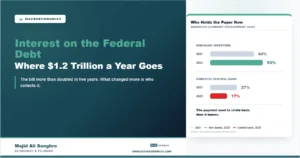
Macroeconomic Trends and Analysis Interest on the Federal Debt: Where $1.2 Trillion Goes Interest on the federal debt passed $1.2 trillion a year. The total is public; what changed is who receives the... August 8, 2026
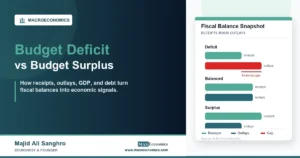
Macroeconomic Trends and Analysis Budget Deficit vs Budget Surplus: What Government Balances Mean Budget deficit explains when government spending exceeds revenue, how surpluses differ, and why fiscal balances must be read against debt,... June 20, 2026
Microeconomics What Is a Market? Buyers, Sellers, and How Prices Emerge What is a market explains how buyers, sellers, information, rules, and competition interact so prices emerge and exchange becomes possible. June 20, 2026
Microeconomics Human Capital: The Economics of Skills, Education, and Health Human capital explains how skills, education, health, and experience raise productivity, wages, employment prospects, and long-run economic growth. June 20, 2026
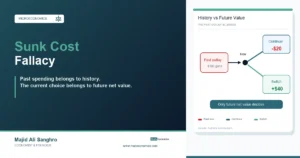
Microeconomics Sunk Cost Fallacy: Why Past Spending Should Not Decide Sunk cost explains why past spending should not control present decisions. The real choice depends on future benefits, future costs,... June 20, 2026
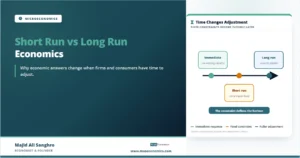
Microeconomics Short Run vs Long Run in Economics: Why Time Changes the Answer Short run vs long run explains why economic answers change when firms, consumers, workers, and policymakers have more time to... June 20, 2026
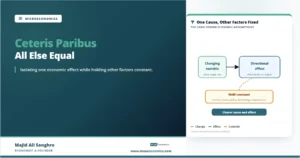
Microeconomics Ceteris Paribus: What It Means and Why Economists Assume It Ceteris paribus means holding other factors constant so economists can isolate one cause before interpreting real-world outcomes. June 20, 2026